Empowering Institutions with Smart Solutions
Helping institutions grow smarter with innovative solutions, simplifying management and boosting productivity.

Get a Live Demo for ERP today!
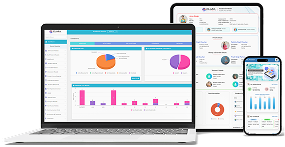
Helping institutions grow smarter with innovative solutions, simplifying management and boosting productivity.
AI Tools Every School Principal Should Know About
Every week, a new AI product promises to transform your school. Some of them genuinely help. Others are old features with a new label. As a principal, you dont need to become a technologist. You need a clear way to tell the difference. Here is a plain-language guide to the AI tools worth your attention, and the claims worth questioning.
Attendance tracking, timetable planning, fee reminders, and report generation are repetitive and rule-based, which makes them ideal for AI. The payoff is immediate: fewer hours of manual work and fewer errors.

When attendance, grades, and assessments live in one system, AI can flag patterns early: a student whose marks are slipping, a class with rising absences, a subject where many learners struggle. You still decide what to do, but you find out sooner.
AI writing tools can help teachers draft lesson plans, create practice questions, and prepare first-pass feedback on student work. Teachers stay in control and edit everything. Think of it as a capable assistant, not a replacement.
Automated alerts, progress summaries, and translated updates keep parents informed without adding to staff workload. Sensitive conversations still need a human voice.
Some learning tools adjust the difficulty of practice questions based on how a student performs. Used for revision and skill-building, they can help students move at their own pace. Their value depends on how well they match your curriculum.
Be cautious about
"Fully automated grading" for open-ended work. AI can support marking, but essays and projects still need teacher judgement.
AI proctoring and surveillance claims. These raise real privacy and fairness concerns, and accuracy is often overstated.
"Personalised for every child" with no explanation. Ask how personalisation works and what data it uses. If the vendor cant explain it simply, be careful.
Predictions presented as certainty. An early-warning flag is a prompt to look closer, not a verdict on a child.
Standalone tools that dont connect to your systems. A clever tool that needs constant manual data entry will add work, not remove it.
1. What problem does this solve for our school, specifically? 2. Where is student data stored, who can access it, and is it used to train other products? 3. Can teachers review and override what the AI produces? 4. Does it integrate with the systems we already use? 5. How much training will staff need, and what support do you provide? 6. Can we pilot it with one class or one department first
Dont try to adopt everything at once. Pick one pain point, such as attendance, reports, or parent updates. Run a small pilot, gather feedback from teachers, and measure the time saved. If it works, expand. If it doesnt, you have lost very little. A solid digital foundation matters most. AI is only as useful as the data behind it, so schools with connected, well-organised systems get far more value than those with scattered spreadsheets.
The best AI tools for schools are quiet ones. They save time, surface useful information, and leave decisions to educators. If a tool is loud about replacing teachers or promising miracles, treat that as a warning sign. At Clara SoftTech, we build school management technology designed around real classroom and administrative needs, so principals and teachers can spend more time on learning.

Transform your operations with innovative solutions designed for efficiency, growth, and success. Let’s create something extraordinary together.